
Is your startup actually investor-ready? 12 financial signals UK VCs check
Your deck says you are ready to raise. Your data room tells a different story: unreconciled bank feeds, a runway number that does not match Xero, and VAT returns filed late last quarter.
UK VCs do not expect audit-grade polish at seed. They do expect financial signals that show you control cash, compliance, and reporting. Miss several and diligence slows or dies.
What does investor-ready mean for UK startups?
Investor-ready means an investor can verify your numbers, compliance, and ownership without rebuilding your books from PDFs. It is a readiness bar, not a valuation claim.
For UK limited companies, that includes Companies House filings, HMRC obligations, and monthly reporting discipline on top of product traction.
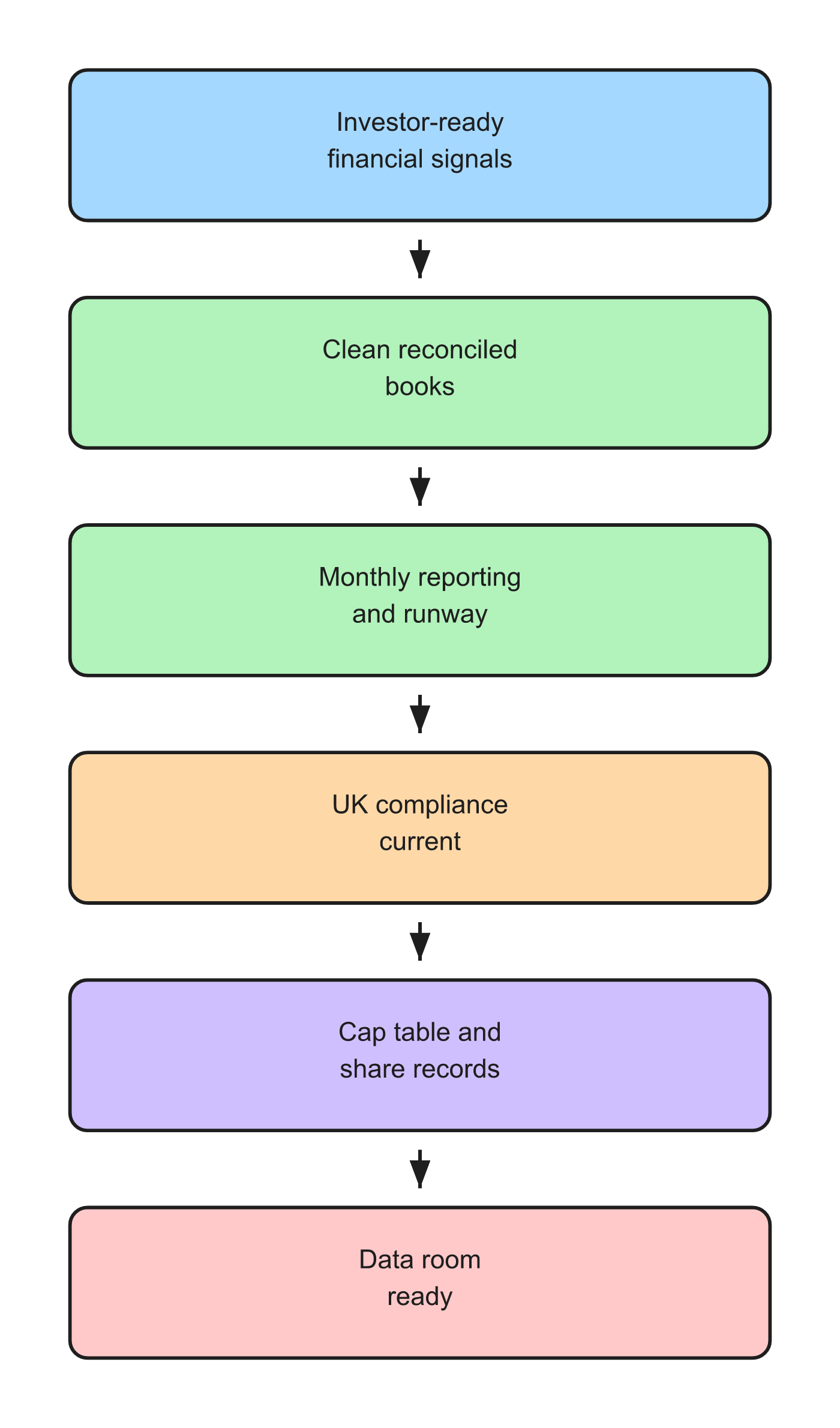
Financial signals VCs check first
SYSTEM INSIGHT / NEXT STEP
Make the next move with clarity.
If this issue is already showing up in reporting, runway, or team decisions, the next move is usually clearer with a structured finance view.
The 12 financial signals
1. Bank reconciled to the ledger (last 12 months minimum)
Every month-end, bank balances match Xero (or your ledger). No long list of unreconciled items.
2. One source of truth for revenue
MRR in the deck matches invoicing or billing data and the P&L. Investors will reconcile all three.
3. Burn and runway calculated consistently
Define net burn the same way each month. Runway should follow from cash divided by burn, not a rounded slide number.
4. Monthly management accounts exist
Not only year-end. See what should be in management accounts.
5. Investor updates sent on cadence
Monthly after seed is typical. Gaps of two or more months raise questions. Use an investor update template.
6. Payroll filed and paid on time
PAYE and pensions errors create HMRC risk and employee trust issues. Diligence requests RTI summaries.
7. VAT returns current (if registered)
Late VAT points and interest are compliance red flags. See missed VAT deadlines.
8. Companies House accounts filed on time
Late accounts are public record. See Companies House penalties.
9. CT600 and corporation tax handled
Accounts filed at Companies House without a filed CT600 suggests tax process gaps. See CT600 vs annual accounts.
10. Cap table matches statutory records
EMI options, SAFEs, and convertible notes reconciled to Companies House share capital and shareholder registers.
11. R&D narrative matches payroll (if claiming)
Software R&D claims without project records fail scrutiny.
12. Data room financials match board packs
If the investor update, board pack, and data room show different revenue for the same month, trust collapses.
How UK VCs use these signals
Early calls test narrative fit. Diligence tests whether numbers survive contact with the ledger.
Angels may be lighter on process. Institutional seed funds often send a financial request list within days of term sheet interest.
None of the twelve requires Big Four accounts. They require discipline.
Signals you are not ready yet
Founder still categorising last quarter in spreadsheets the week before diligence.
Runway in the deck uses "optimistic burn" excluding known hires.
HMRC or Companies House letters unanswered in the inbox.
No monthly close process. See month-end close checklist.
In practice
Investor readiness is built in the twelve months before the raise, not the twelve days before the data room opens.
Finance ops that produce monthly financial reporting for investors from live books make every signal easier to pass.
FAQs
What financial information do UK VCs need for due diligence?
Typically: monthly P&L and balance sheet, cash and runway, cap table, tax filings status, payroll summary, and contracts for material revenue.
How long before a raise should we clean up books?
Ideally 6 to 12 months. Emergency clean-ups work but cost more and delay the process.
Do pre-revenue startups need investor-ready financials?
You still need clean books, cap table, and compliance current. Metrics differ, but control signals matter.
Is investor-ready the same as audit-ready?
No. Audit-ready is a higher bar. Investor-ready means consistent, reconciled, and documented numbers.
What is the first thing VCs check financially?
Usually cash, runway, and revenue trend against what you pitched.
**Raising in the next two quarters?** Talk to an Expert or see pricing.


